Monday, 25 March 2013

Representations of Gypsies and Travellers in The Media

Big Fat Gypsy Wedding - 

  • Controversial use of the word 'gypsy' in the title, as the program is actually about Irish travellers.
  • Focuses on weddings, but also on traveller lifestyle and gender roles within their community
  • Often explores the place of women, their clothes
  • Shows traveller women as having a lack of education, having old fashioned values, dressing provocatively to appeal to men and portrays that their life's purpose is to be a mother, wife and housekeeper
  • Shows traveller men as uneducated, loud, confrontational, as heavy drinkers and slightly abusive and misogynistic towards women
  • Has been criticised for it's focus on how young traveller girls dress and act, has been accused of sexualising these girls
  • Has been criticised for it's narrow view on traveller culture, and the fact that it only highlights certain parts of traveller life 
  • Has been praised for raising awareness of traveller's culture, family values and strong sense of community
  • Showed the struggle of travellers who are being evicted from their homes by local councils, their rough treatment by police and the support they received from local members of the public
Traveller Times Blog;
  • News and current affairs blog written by gypsies and travellers
  • Includes articles about media portrayal of their communities, as well as events and listings for job opportunities
  • Articles are well researched and written, breaking the stereotype that gypsies and travellers are uneducated or old fashioned.
  • It also includes a section 'Who are Gypsies and Travellers?' aimed at educating the public


Monday, 18 March 2013

Disability in the Media

Ouch! Blog - http://www.bbc.co.uk/blogs/ouch/ -

Lost - TV Drama, had one disabled character (in a wheelchair), Locke (one of the main characters).

Paralympics - Coverage of sports event on Channel 4, http://www.london2012.com/paralympics/sports/

My Left Foot - Drama film about a man with cerebral palsy, who only has control of one of his feet. Insitution - Granada Films, Miramax films

Born To Be Different - Documentary on Channel 4, which follows the life of six disabled children.

Questions;
  • What are the dominant representations of disability in the media?
  • How does the media shape the collective identity of disabled people?
  • Are there any examples of media that give alternative representations, and who are the institutions behind these?
  • How has the representation of disabled people in the media changed over time?

Wednesday, 6 March 2013

Andrew Goodwin's Music Video Theory


Andrew Goodwin's book 'Dancing in The Distraction Factory', published by the University of Minnesota Press in 1992, was the first book to focus on MTV and music videos in popular culture. In it, Goodwin proposes a 'music video theory' - pointing out the common features and conventions of the music video, as well as the techniques used to attract it's intended audience and promote the artist's product. Although written over two decades ago, it is still very applicable to the music videos made today, particularly those within popular and mainstream music genres.

  • Music videos have genre-specific conventions and characteristics - For example, pop videos often feature women dancing, electronic music videos use bright colours and graphics, whereas indie rock videos include lots of band shots.
  • There is a relationship between the lyrics and visual aspects of the video - The imagery used in the video can either illustrate the lyrics, amplify / draw attention to them or contradict them.
  • There is a relationship between the music and visual aspects of the video - Once again, the visuals in the video can either amplify the beat of the music, and 'flow' with it's rhythm or purposefully contradict the beat to attract attention to it.
  • There is a focus on the artist in the video - Record labels often demand that a lot of focus is put on the artist, usually resulting in a lot of close-up lip-syncing shots, as this is a good means of promotion. Also, artists may develop recognisable 'trademarks' through music videos, which will be cohesive / be included in their other promotion material.
  • There is a notion of looking and the male 'gaze' - A lot of music videos are filmed in a way that follow the 'male gaze'. For example, a voyeuristic view of the female body is common. In addition to this, focus on the artist helps the audience to connect more with them, as they are looking at them for a longer period of time.
  • Intertextual references (to other media products) are common in music videos - Music videos can reference films, books and TV that their target audience would be familiar with.
This theory is important for us to look at before we create our media product, as it highlights the conventions of the music video; allowing us to decide which conventions we want to follow and which we want to challenge. It also gives us things to look out for whilst analysing music videos from our chosen artist and from other artists within the genre.

Tuesday, 5 March 2013

Types of representation in the media...

DOMINANT;

  • The most common way in which a certain group of people is seen or represented
  • A representation that is often repeated through the media

Examples; Young black men seen as aggressive, criminals or troublemakers. Teenagers shown as lazy and work-shy. Older white men shown as wise and knowledgeable.


ALTERNATIVE;

  • When a group is represented in a way that challenges or goes against the dominant representation
  • Representations that are not shown as often by the media
Example; Teenagers shown helping the community.   


REDUNDANT;

  • When a representation of a group is repeated constantly over a period of time and loses it's impact
  • A representation that is no longer relevant, or is old-fashioned
  • No longer shown as often by the media, but was previously dominant
Examples; Women being shown as weak


ABSENT;

  • When a group is often left unrepresented by the media
  • A lack of visibility of a certain group of people within the media
Examples; Women above middle aged, Romany gypsies, Ethnic Minorities, 


ENTROPIC;

  • When a group is represented in a way that is extremely uncommon, controversial or challenging
  • A representation that heavily challenges how a group is portrayed in the media
Examples; 

Monday, 4 March 2013

Big Fat Gypsy Wedding - Controversy and Responses

http://pipopotamus.blogspot.co.uk/2012/02/open-letter-to-chanel-4.html

This blog post, written by 18 year old Romany boy, highlights his concerns about the representation of Gypsy / Traveller communities on My Big Fat Gypsy Wedding. It also addresses how these representations have directly affected his life; for example, being physically assaulted by members of the public whose opinion of his community had been shaped by this TV show.

He questions some of the areas that Channel 4 decided to focus on; the clothing & behaviour of young girls, travellers who have dropped out of education and the 'grabbing' custom of Irish Travellers. More basically, he also questioned why the title of a series about Irish Travellers was called 'My Big Fat Gypsy Wedding'.

http://www.channel4.com/4viewers/editors-blog/an-open-letter-to-pipogypopotamus

Channel 4's response to Pip's blog post seems very formulaic. They do not directly answer his concerns, instead insisting that the programme did not show travellers in a negative light.

Monday, 4 February 2013

Britishness Presentations (Notes)

LAUREN;

Common features of British films - regional dialect, drinking, ethnic diversity, swearing, fashion,
87% - 80% White British from 2001-2011, shows change in composition / identity of the population
Changing attitudes to different sexualities (Eastenders)
Not as many boundaries / as much censorship within film, allowing them to explore themes such as sex, violence and social issues more thoroughly
More people go on to higher education - people from different backgrounds
Changing attitudes to mixed race couples (Taste of Honey)

JOSH

Britain on film showed what life was like in Britain in 1960's
Showed teenager's summer activities, complete contrast to Sun, Sex and Suspicious Parents
SSSP showed what teenagers get up to in party resorts such as Malia, Kos, Ibiza etc - drinking, clubbing, sex
Britain on film documentary - everyone was happy, didn't include negative aspects of British life
Compared to modern day - Fish Tank - where flaws in British society are also explored
Taste of Honey set in same time period as Britain on film, but shows depressing and bleak side of life in Britain
TOH shows struggles with race & gender inequalities
British person no longer limited to 'white christian'
Newsreaders, media personalities and politicians come from a range of backgrounds / nationalities

RANA

Britain on film shows a mainly White British population, whose social activities were completely different to ours today
Television shows include a multi-cultural cast and people from various religious and ethnic backgrounds
Dumping Ground is a CBBC show that deals with a lesbian couple as they adopt a child, it also explores various attitudes towards this issue through the characters

Monday, 21 January 2013

Notes on British Identity in film

FISH TANK (2009)


- Use of slang / regional dialect  - Setting, run down council estate - Fighting, aggresive attitude, abusive - Shows people not working, looking for a fight - Set in Dagenham, exaggerated stereotypes based on truth - Documentary style filming, camera work - Establishing shot at beginning of clip - Costume (tracksuit, hoodie, trainers, chains, etc) - Depiction of confrontational attitude within the community - Metaphor of trying to free horse from it's chains + poor treatment from the people around it - 'Fish Tank' title suggests entrapment in the same cycle, repetitive life, no way to get out of your circumstances -

LOVE ACTUALLY (2003)

[Link to clip; http://www.youtube.com/watch?v=iYGr2GA2EGA&list=PLEF68384428FFa5474&index=5]

- Iconic symbols and imagery shown, represent Britishness; Union Jack flag, Churchill, Shakespeare - Music playing in background is cheesy, but brings a 'victorious' atmosphere, pride - All of the famous figures mentioned were white & male - Formal language, suits and ties, upper class - Relationship between UK and USA explored, Britain depicted as small but powerful -

THIS IS ENGLAND (2006)


- Exploration of relationship between skinhead subculture and white nationalism - Shows racial abuse towards Asian shopkeeper by gang of white males of various ages - Set in the early / mid 1980's - At beginning, the graffiti is spelt wrong, shows lack of education & understanding of the 'cause' they represent - Bad language, racist language, slang - Set in Midlands or North of England? -

Sunday, 14 October 2012

Research - Representations of Mental Illness in Film *UNFINISHED*

Whilst on the internet a couple of days ago, I stumbled across an article about representations of mental illness in the media and it caught my interest. I've often heard / thought about how stereotypical and negative representations of different ethnicities and age groups can be inaccurate and damaging, however the way mental illness is represented is rarely talked about.

[article from www.timetochange.org.uk]

The article featured the opinion of psychiatrist and film expert Dr Peter Byrne, whose opinion was that representation of mental illness in film is more negative and 'crueler' than ever. He explains that he thinks recent blockbuster films such as The Dark Knight (2008) are increasingly representing sufferers of mental illnesses as violent and unpredictable; furthering negative stereotypes.

After reading the article, I thought about films that I had seen that featured characters with mental illness, and how this issue was handled within the film;

THE DARK KNIGHT (2008)

Before the article, I hadn't considered the depiction of mental illness in the Dark Knight (despite the fact that is was a massively famous film, and one of my favourites) and am still not quite sure whether it can be grouped in with the other films I am going to look at. The Joker is portrayed as psychopathic and somewhat schizophrenic, with Batman describing him as 'schizophrenic' within the film. The character displays the typical negative stereotype of a schizophrenic - multiple personalities - with one of them evil, out of control and a danger to others.


GIRL, INTERRUPTED (1999)

Before I watched this film, I was interested in how a film where all of the main characters have a psychological problem of some sort would represent these characters. It's rare that the topic of mental illness is the focus of a film; this film follows the story of 18 year old Susannah who has just been checked into a psychiatric hospital after attempting suicide. She soon meets the other patients of the hospital, which gives the film a chance to accurately represent an array of different mental illnesses. It does reach it's potential in some respects as it shows the negative impact of ignorance on the girl's lives and it touches upon some of the less well publicised impacts of mental illness on somebody's life. However, it also features negative stereotypes, such as people with mental illness being weak, needy or manipulative and doesn't put enough into making clear that these are traits of the character, not of their illness.


BLACK SWAN (2011)
Despite the fact that 'Black Swan' is more of a psychological horror film than a film about mental illness, in my opinion it can clearly be regarded as a metaphor or exploration into this subject.


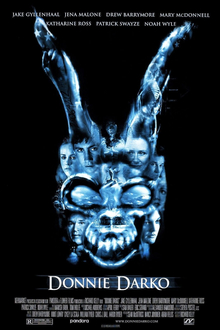
DONNIE DARKO (2001)
Another psychological horror film that depicts mental illness in a more metaphorical way, Donnie Darko is now quite popular, a 'cult' film. Scenes of Donnie speaking to his psychiatrist are scattered throughout the film, and the whole narrative of the film is seen from Donnie's perspective, meaning that the entire storyline is quite ambiguous. It blurs the line between reality through the eyes of the 'sane' viewer and reality through the eyes of Donnie, leaving the viewer in the dark as to how much of what plays out is simply a creation of his mind. It also questions whether this actually matters - if your mind is telling you that something is 

A BEAUTIFUL MIND (2001)


Summertime Sadness (Music Video)

A lot of parallels can be drawn between this video and the look / mood I want to create for our music video. The combination of character focused shots, 'past / self shot footage' and carefully selected imagery is used to build the audience's understanding of what the video is about, rather than having a clear narrative. It has a subtlety to the way it approaches it's subject matter, and this makes a very intriguing watch. The audience empathises with the 'character' without actually knowing anything about them. We feel sad for them because the combination of the music / lyrics with the slow replaying of 'video camera' footage and the shots of her falling make us reflect on our own past and what we feel we've lost.

Sunday, 30 September 2012

Later (Short Film)

Later from Simon Duric on Vimeo.

I found this short film on Vimeo and thought it was a very unique take on the 'zombie' subgenre.

Representations of Teenagers & Collective Identity


Discuss how one or more groups of people are represented through the media.

With the recent Paralympic games fresh in the minds of the public, issues surrounding disability are currently in the media spotlight. Never have people with disability been so represented on our TV screens, and never have they been so praised for their acheivements. However, there is debate as to whether the impact of the Paralympic games will be as positive as first thought.

Before the Paralympics, many disabled people thought that the public had a negative impression of them. The media focus on welfare cuts means that a majority of the coverage of disability on TV was linked to benefit fraud, causing a stereotype that disabled people are too lazy to work. Peter White, the BBC’s disability correspondant, points out that ‘They cite government plans to cut welfare benefits, and the media coverage accompanying it which often allies "disabled" to "benefit scrounger"’.

However, with the Paralympics being so highly covered in the media, it was hoped that this negative public opinion could be transformed into a positive one. The International Paralympic Commitee recently revealed that the 2012 Paralympics had broke online records, with 2 million people visiting their website during the event and a 50% increase in Twitter followers. There is no doubt the Paralympics were a huge success, but will they have a lasting impact on media representation and public perception of people with disabilities?

Alice Maynard, the chairwoman of the disability charity Scope, has said that she thinks that not only the athletes, but the many disabled pundits and presenters are a positive representation of disability. She is quoted as saying "They'll be seen as authority figures; the ones doing the explaining, teasing out the technicalities". This kind of representation is one that we are not used to seeing in the media, usually disabled people are portrayed as simply victims of their disability - people to be pitied, or people who can't do things for themselves. In the respect, Paralympic coverage was definitely a positive example of media representation and I think it will make a different to how disabled people are viewed by society.

However, there are also dangers that come with coverage of such a specific event. Not all disabled people are able to, or would want to, take part in events like the Paralympic. Just as Olympic athletes do not represent the general population, Paralympic athletes do not represent everybody with a disability. Baroness Grey Thompson has pointed out that 'The Paralympics is the fairy-dust we sprinkle on life as a disabled person, it shows a snapshot in time of some extraordinary people who train very hard, who are good at sport'. There is a worry that the amazing Paralympic athletes may further the myth that disabled people who are unable to work are actually just 'lazy' or 'benefit scroungers'. In this way, the coverage of the Paralympics may not be as valuable as first though, unless it is followed by more disability coverage in the media; one that includes a variety of different people with different situations.

I think that the Paralympics were a very positive representation of people with disabilities, however as I previously stated, they only represented a minority of disabled people. On the other hand, I think that the coverage has removed some of the stigma as far as talking about disability goes, and this may open a door for more open conversation and therefore a better understanding of the issue. Overall, I hope that the Paralympic coverage has brought about a change in media representation of disability. I would like to see disabled people featured in media programmes across the board, not just on those that are about disability. This may help to remove the 'them and us' attitude that I think has dominated media coverage of disability in the past.

Tuesday, 18 September 2012

Exam Question - Disability in the media


Discuss how one or more groups of people are represented through the media.

With the recent Paralympic games fresh in the minds of the public, issues surrounding disability are currently in the media spotlight. Never have people with disability been so represented on our TV screens, and never have they been so praised for their acheivements. However, there is debate as to whether the impact of the Paralympic games will be as positive as first thought.

Before the Paralympics, many disabled people thought that the public had a negative impression of them. The media focus on welfare cuts means that a majority of the coverage of disability on TV was linked to benefit fraud, causing a stereotype that disabled people are too lazy to work. Peter White, the BBC’s disability correspondant, points out that ‘They cite government plans to cut welfare benefits, and the media coverage accompanying it which often allies "disabled" to "benefit scrounger"’.

However, with the Paralympics being so highly covered in the media, it was hoped that this negative public opinion could be transformed into a positive one. The International Paralympic Commitee recently revealed that the 2012 Paralympics had broke online records, with 2 million people visiting their website during the event and a 50% increase in Twitter followers. There is no doubt the Paralympics were a huge success, but will they have a lasting impact on media representation and public perception of people with disabilities?

Alice Maynard, the chairwoman of the disability charity Scope, has said that she thinks that not only the athletes, but the many disabled pundits and presenters are a positive representation of disability. She is quoted as saying "They'll be seen as authority figures; the ones doing the explaining, teasing out the technicalities". This kind of representation is one that we are not used to seeing in the media, usually disabled people are portrayed as simply victims of their disability - people to be pitied, or people who can't do things for themselves. In the respect, Paralympic coverage was definitely a positive example of media representation and I think it will make a different to how disabled people are viewed by society.

However, there are also dangers that come with coverage of such a specific event. Not all disabled people are able to, or would want to, take part in events like the Paralympic. Just as Olympic athletes do not represent the general population, Paralympic athletes do not represent everybody with a disability. Baroness Grey Thompson has pointed out that 'The Paralympics is the fairy-dust we sprinkle on life as a disabled person, it shows a snapshot in time of some extraordinary people who train very hard, who are good at sport'. There is a worry that the amazing Paralympic athletes may further the myth that disabled people who are unable to work are actually just 'lazy' or 'benefit scroungers'. In this way, the coverage of the Paralympics may not be as valuable as first though, unless it is followed by more disability coverage in the media; one that includes a variety of different people with different situations.

I think that the Paralympics were a very positive representation of people with disabilities, however as I previously stated, they only represented a minority of disabled people. On the other hand, I think that the coverage has removed some of the stigma as far as talking about disability goes, and this may open a door for more open conversation and therefore a better understanding of the issue. Overall, I hope that the Paralympic coverage has brought about a change in media representation of disability. I would like to see disabled people featured in media programmes across the board, not just on those that are about disability. This may help to remove the 'them and us' attitude that I think has dominated media coverage of disability in the past.

Tuesday, 26 June 2012

Music Video Examples


I like this video because unlike a lot of other music videos, it manages to tie a band performance shot with the other parts of the video by having them take place in the same location. There is not really a clear message or meaning, but the movement of the people in the video, their facial expressions and the choice of colour goes with the mood of the song.


This music video carries similar message to the song, in my opinion, which is one that is quite emotional and personal to the artist. However, it is portrayed in a way that is both unique and relatable for the viewer. The lighting adds to the mood, and the acting in it is convincing, which enables the video to look professional (if only the band were acting in it, and they didn't have experience, it might have become amateur looking and slightly comedic to their fans watching). Only the singer from Slipknot, Corey Taylor, is featured in the video, and unlike in all of their other videos, he has dropped the heavily dark and theatrical appearance. This not only provides a shock to the audience, but also allows the video to become more raw and 'intimate' looking.
and

These videos rely heavily on styling, costume and make-up to create the mood and help the video be appropriate to the artist.In the first one, for Coma White, there is more of a clear narrative than the second. However, I don't think that this takes away from the effectiveness of the second video - it just leaves it more up for interpretation by the viewer.


Compared to the others I have chosen, this video is very straight forward and relies on an interesting setting. It reminds me of a photograph a little, in it's stillness and how slow the movement is - also in the choice of angles that highlight the shape of the architecture.

Monday, 18 June 2012

Preferred topics for Media A2

My preferred topic would be to make a music video as it would allow us to explore a different media area, other than film. It would also mean that we could be creative when matching visuals to music and creating a mood that fits with our chosen song. If we were to make one, we would have to research into what makes a successful music video, as well as maybe look at the chosen artists previous music videos (or if they don't have any, consider their genre of music) and decide what imagery would be appropriate for the song. My second choice would be to make a short film, because it allows us to use the skills we learnt over the last year and use it in a different area of film. We would have to research into short films, looking at what we like and dislike about particular examples. Also, we would have to think of a subject / meaning / message behind the film, as well as a storyline or some sort. For both briefs, we could use some of the skills we learnt whilst making our film opening. For example, technical skills such as operating the camera, successful editing and use of sound. In addition to these, we would consider other things we learnt such as the importance of planning, choosing the correct cast and consistency in video quality. We would need to use video editing software, such a iMovie and sound editing software such as GarageBand. For the second unit, I would like to do Media and Collective Identity and