http://pipopotamus.blogspot.co.uk/2012/02/open-letter-to-chanel-4.html
This blog post, written by 18 year old Romany boy, highlights his concerns about the representation of Gypsy / Traveller communities on My Big Fat Gypsy Wedding. It also addresses how these representations have directly affected his life; for example, being physically assaulted by members of the public whose opinion of his community had been shaped by this TV show.
He questions some of the areas that Channel 4 decided to focus on; the clothing & behaviour of young girls, travellers who have dropped out of education and the 'grabbing' custom of Irish Travellers. More basically, he also questioned why the title of a series about Irish Travellers was called 'My Big Fat Gypsy Wedding'.
http://www.channel4.com/4viewers/editors-blog/an-open-letter-to-pipogypopotamus
Channel 4's response to Pip's blog post seems very formulaic. They do not directly answer his concerns, instead insisting that the programme did not show travellers in a negative light.

Monday, 4 March 2013

Wednesday, 6 February 2013
Monday, 4 February 2013
Britishness Presentations (Notes)
LAUREN;
Common features of British films - regional dialect, drinking, ethnic diversity, swearing, fashion,
87% - 80% White British from 2001-2011, shows change in composition / identity of the population
Changing attitudes to different sexualities (Eastenders)
Not as many boundaries / as much censorship within film, allowing them to explore themes such as sex, violence and social issues more thoroughly
More people go on to higher education - people from different backgrounds
Changing attitudes to mixed race couples (Taste of Honey)
JOSH
Britain on film showed what life was like in Britain in 1960's
Showed teenager's summer activities, complete contrast to Sun, Sex and Suspicious Parents
SSSP showed what teenagers get up to in party resorts such as Malia, Kos, Ibiza etc - drinking, clubbing, sex
Britain on film documentary - everyone was happy, didn't include negative aspects of British life
Compared to modern day - Fish Tank - where flaws in British society are also explored
Taste of Honey set in same time period as Britain on film, but shows depressing and bleak side of life in Britain
TOH shows struggles with race & gender inequalities
British person no longer limited to 'white christian'
Newsreaders, media personalities and politicians come from a range of backgrounds / nationalities
RANA
Britain on film shows a mainly White British population, whose social activities were completely different to ours today
Television shows include a multi-cultural cast and people from various religious and ethnic backgrounds
Dumping Ground is a CBBC show that deals with a lesbian couple as they adopt a child, it also explores various attitudes towards this issue through the characters
Common features of British films - regional dialect, drinking, ethnic diversity, swearing, fashion,
87% - 80% White British from 2001-2011, shows change in composition / identity of the population
Changing attitudes to different sexualities (Eastenders)
Not as many boundaries / as much censorship within film, allowing them to explore themes such as sex, violence and social issues more thoroughly
More people go on to higher education - people from different backgrounds
Changing attitudes to mixed race couples (Taste of Honey)
JOSH
Britain on film showed what life was like in Britain in 1960's
Showed teenager's summer activities, complete contrast to Sun, Sex and Suspicious Parents
SSSP showed what teenagers get up to in party resorts such as Malia, Kos, Ibiza etc - drinking, clubbing, sex
Britain on film documentary - everyone was happy, didn't include negative aspects of British life
Compared to modern day - Fish Tank - where flaws in British society are also explored
Taste of Honey set in same time period as Britain on film, but shows depressing and bleak side of life in Britain
TOH shows struggles with race & gender inequalities
British person no longer limited to 'white christian'
Newsreaders, media personalities and politicians come from a range of backgrounds / nationalities
RANA
Britain on film shows a mainly White British population, whose social activities were completely different to ours today
Television shows include a multi-cultural cast and people from various religious and ethnic backgrounds
Dumping Ground is a CBBC show that deals with a lesbian couple as they adopt a child, it also explores various attitudes towards this issue through the characters
Monday, 21 January 2013
Notes on British Identity in film
FISH TANK (2009)
- Use of slang / regional dialect - Setting, run down council estate - Fighting, aggresive attitude, abusive - Shows people not working, looking for a fight - Set in Dagenham, exaggerated stereotypes based on truth - Documentary style filming, camera work - Establishing shot at beginning of clip - Costume (tracksuit, hoodie, trainers, chains, etc) - Depiction of confrontational attitude within the community - Metaphor of trying to free horse from it's chains + poor treatment from the people around it - 'Fish Tank' title suggests entrapment in the same cycle, repetitive life, no way to get out of your circumstances -
LOVE ACTUALLY (2003)
[Link to clip; http://www.youtube.com/watch?v=iYGr2GA2EGA&list=PLEF68384428FFa5474&index=5]
- Iconic symbols and imagery shown, represent Britishness; Union Jack flag, Churchill, Shakespeare - Music playing in background is cheesy, but brings a 'victorious' atmosphere, pride - All of the famous figures mentioned were white & male - Formal language, suits and ties, upper class - Relationship between UK and USA explored, Britain depicted as small but powerful -
THIS IS ENGLAND (2006)
- Exploration of relationship between skinhead subculture and white nationalism - Shows racial abuse towards Asian shopkeeper by gang of white males of various ages - Set in the early / mid 1980's - At beginning, the graffiti is spelt wrong, shows lack of education & understanding of the 'cause' they represent - Bad language, racist language, slang - Set in Midlands or North of England? -
- Use of slang / regional dialect - Setting, run down council estate - Fighting, aggresive attitude, abusive - Shows people not working, looking for a fight - Set in Dagenham, exaggerated stereotypes based on truth - Documentary style filming, camera work - Establishing shot at beginning of clip - Costume (tracksuit, hoodie, trainers, chains, etc) - Depiction of confrontational attitude within the community - Metaphor of trying to free horse from it's chains + poor treatment from the people around it - 'Fish Tank' title suggests entrapment in the same cycle, repetitive life, no way to get out of your circumstances -
LOVE ACTUALLY (2003)
[Link to clip; http://www.youtube.com/watch?v=iYGr2GA2EGA&list=PLEF68384428FFa5474&index=5]
- Iconic symbols and imagery shown, represent Britishness; Union Jack flag, Churchill, Shakespeare - Music playing in background is cheesy, but brings a 'victorious' atmosphere, pride - All of the famous figures mentioned were white & male - Formal language, suits and ties, upper class - Relationship between UK and USA explored, Britain depicted as small but powerful -
THIS IS ENGLAND (2006)
- Exploration of relationship between skinhead subculture and white nationalism - Shows racial abuse towards Asian shopkeeper by gang of white males of various ages - Set in the early / mid 1980's - At beginning, the graffiti is spelt wrong, shows lack of education & understanding of the 'cause' they represent - Bad language, racist language, slang - Set in Midlands or North of England? -
Sunday, 14 October 2012
Research - Representations of Mental Illness in Film *UNFINISHED*
Whilst on the internet a couple of days ago, I stumbled across an article about representations of mental illness in the media and it caught my interest. I've often heard / thought about how stereotypical and negative representations of different ethnicities and age groups can be inaccurate and damaging, however the way mental illness is represented is rarely talked about.
[article from www.timetochange.org.uk]
 The article featured the opinion of psychiatrist and film expert Dr Peter Byrne, whose opinion was that representation of mental illness in film is more negative and 'crueler' than ever. He explains that he thinks recent blockbuster films such as The Dark Knight (2008) are increasingly representing sufferers of mental illnesses as violent and unpredictable; furthering negative stereotypes.
After reading the article, I thought about films that I had seen that featured characters with mental illness, and how this issue was handled within the film;

.jpg)

BLACK SWAN (2011)


[article from www.timetochange.org.uk]

After reading the article, I thought about films that I had seen that featured characters with mental illness, and how this issue was handled within the film;

THE DARK KNIGHT (2008)
Before the article, I hadn't considered the depiction of mental illness in the Dark Knight (despite the fact that is was a massively famous film, and one of my favourites) and am still not quite sure whether it can be grouped in with the other films I am going to look at. The Joker is portrayed as psychopathic and somewhat schizophrenic, with Batman describing him as 'schizophrenic' within the film. The character displays the typical negative stereotype of a schizophrenic - multiple personalities - with one of them evil, out of control and a danger to others.
.jpg)
GIRL, INTERRUPTED (1999)
Before I watched this film, I was interested in how a film where all of the main characters have a psychological problem of some sort would represent these characters. It's rare that the topic of mental illness is the focus of a film; this film follows the story of 18 year old Susannah who has just been checked into a psychiatric hospital after attempting suicide. She soon meets the other patients of the hospital, which gives the film a chance to accurately represent an array of different mental illnesses. It does reach it's potential in some respects as it shows the negative impact of ignorance on the girl's lives and it touches upon some of the less well publicised impacts of mental illness on somebody's life. However, it also features negative stereotypes, such as people with mental illness being weak, needy or manipulative and doesn't put enough into making clear that these are traits of the character, not of their illness.

BLACK SWAN (2011)
Despite the fact that 'Black Swan' is more of a psychological horror film than a film about mental illness, in my opinion it can clearly be regarded as a metaphor or exploration into this subject.
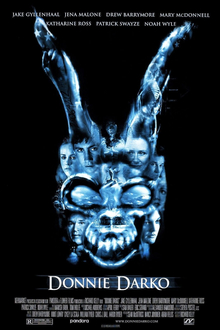
DONNIE DARKO (2001)
Another psychological horror film that depicts mental illness in a more metaphorical way, Donnie Darko is now quite popular, a 'cult' film. Scenes of Donnie speaking to his psychiatrist are scattered throughout the film, and the whole narrative of the film is seen from Donnie's perspective, meaning that the entire storyline is quite ambiguous. It blurs the line between reality through the eyes of the 'sane' viewer and reality through the eyes of Donnie, leaving the viewer in the dark as to how much of what plays out is simply a creation of his mind. It also questions whether this actually matters - if your mind is telling you that something is
Another psychological horror film that depicts mental illness in a more metaphorical way, Donnie Darko is now quite popular, a 'cult' film. Scenes of Donnie speaking to his psychiatrist are scattered throughout the film, and the whole narrative of the film is seen from Donnie's perspective, meaning that the entire storyline is quite ambiguous. It blurs the line between reality through the eyes of the 'sane' viewer and reality through the eyes of Donnie, leaving the viewer in the dark as to how much of what plays out is simply a creation of his mind. It also questions whether this actually matters - if your mind is telling you that something is

A BEAUTIFUL MIND (2001)
Summertime Sadness (Music Video)
A lot of parallels can be drawn between this video and the look / mood I want to create for our music video. The combination of character focused shots, 'past / self shot footage' and carefully selected imagery is used to build the audience's understanding of what the video is about, rather than having a clear narrative. It has a subtlety to the way it approaches it's subject matter, and this makes a very intriguing watch. The audience empathises with the 'character' without actually knowing anything about them. We feel sad for them because the combination of the music / lyrics with the slow replaying of 'video camera' footage and the shots of her falling make us reflect on our own past and what we feel we've lost.
Tuesday, 2 October 2012
Subscribe to:
Posts (Atom)